
How Surgery Centers Can Stay Compliant with OSHA & EPA Waste Rules
Surgery centers handle a variety of biohazardous waste every day, including used needles, blood-stained gauze, and other medical materials. Small errors in labeling, storage, or staff training can put employees at risk and expose the facility to significant fines under OSHA and EPA regulations. Achieving proper OSHA and EPA compliance for surgery centers requires understanding the specific rules that govern employee safety and the disposal of medical and hazardous waste. This guide explains essential requirements and provides clear actions to ensure each stage of waste management meets regulatory standards and safeguards staff and patients.
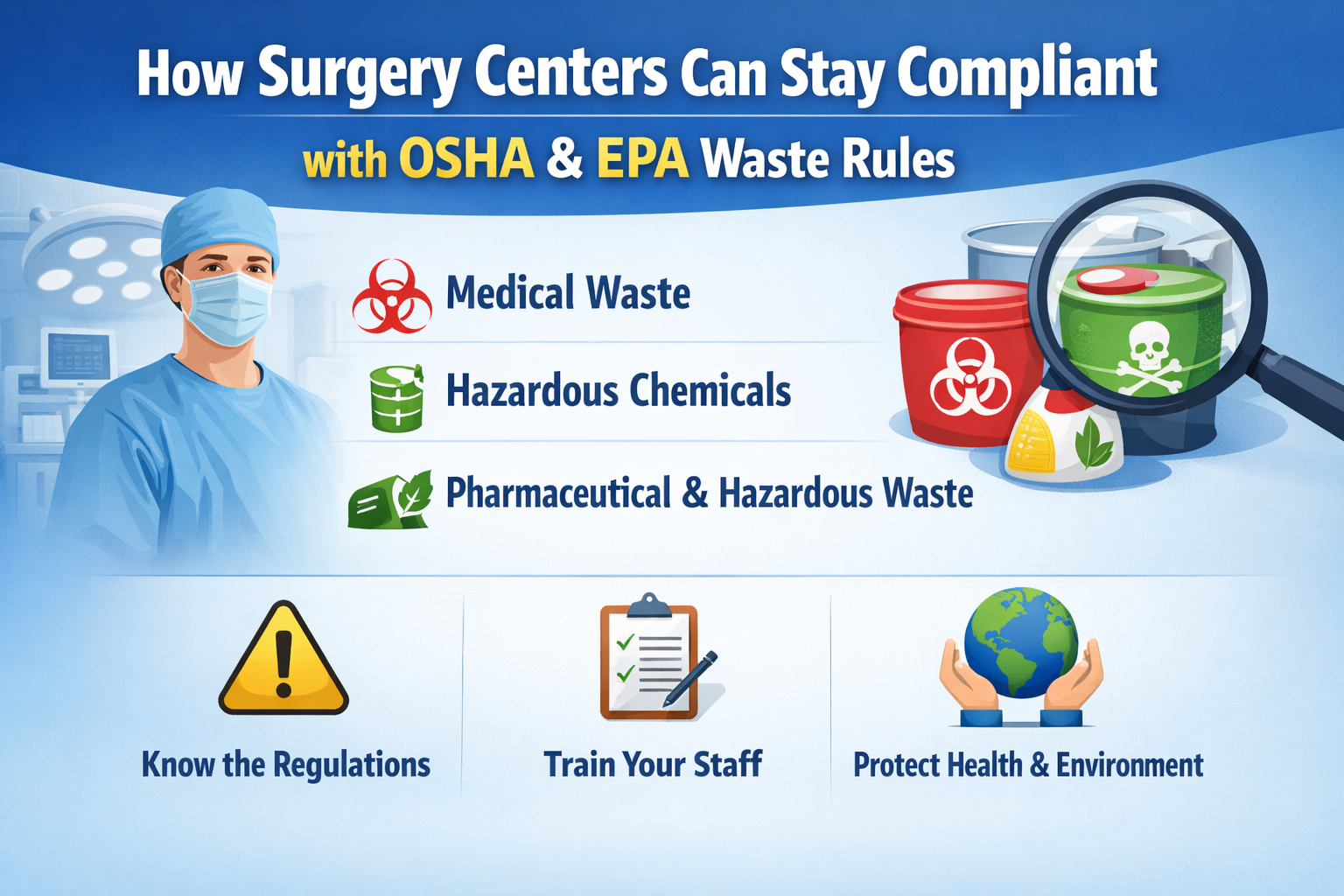
OSHA and EPA Compliance InsightsSurgery centers must follow strict OSHA and EPA regulations to ensure safe management of medical and hazardous waste. Key requirements include proper sharps handling, staff training, exposure control, accurate waste classification, secure storage, approved treatment methods, and thorough documentation. Adhering to these standards protects employees, patients, and the environment while minimizing regulatory risk and ensuring full compliance. |
OSHA Medical Waste Regulations Surgery Centers Must Follow
Below are the OSHA rules that surgery centers must follow to manage medical waste safely, reduce employee exposure risks, and maintain medical waste compliance for surgery centers.
Bloodborne Pathogens Standard Applicability to Surgical Medical Waste
- The Bloodborne Pathogens Standard under 29 CFR 1910.1030 governs how surgery centers must manage medical waste that presents exposure risks to employees
- The standard applies to surgical procedures where blood or other potentially infectious materials are present
- Regulated medical waste generated during surgery is covered when employees may be exposed during handling, containment, transport, or cleanup
- Compliance focuses on preventing occupational exposure during surgical waste handling rather than environmental disposal
Exposure Control Plan Requirements for Surgical Waste Management
- Each surgery center must maintain a written Exposure Control Plan specific to surgical operations
- The plan must identify surgical procedures and tasks that generate regulated medical waste
- High-risk tasks such as sharps handling, instrument removal, suction canister disposal, and post-operative cleanup must be documented
- Procedures for containment, labeling, internal transport, and spill response for surgical waste must be outlined
- Response protocols for sharps injuries and exposure incidents occurring during surgery must be included
- The plan must be reviewed and updated at least annually or when surgical practices change
Regulated Medical Waste Generated During Surgical Procedures
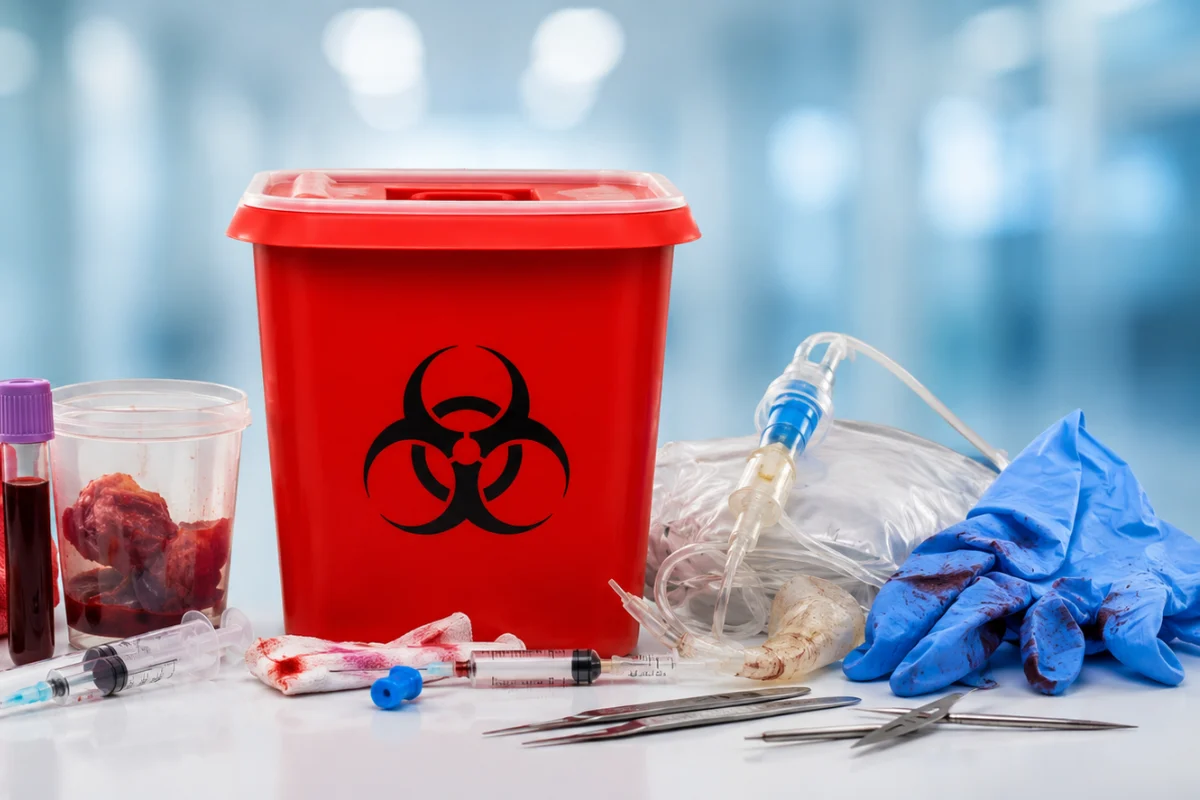
- Contaminated sharps used during surgery including needles, scalpel blades, trocar tips, and guidewires
- Blood and body fluids collected in suction canisters during operative procedures
- Surgical materials saturated or caked with blood that could release infectious material when handled
- Disposable surgical instruments contaminated with blood or body fluids
- Human tissues and body parts removed during surgical procedures
Sharps Disposal Standards Within Operating and Procedure Rooms
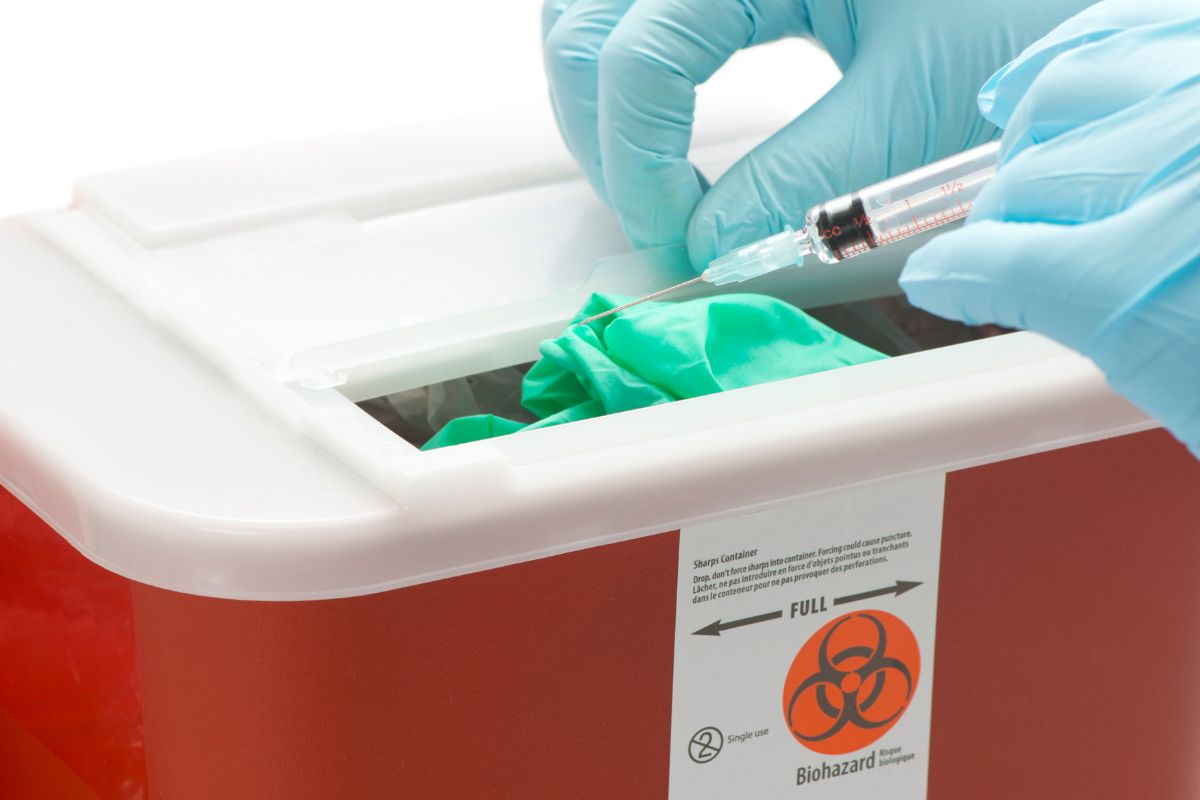
- Sharps must be disposed of immediately after use during surgical procedures
- Disposal must occur at the point of use to eliminate handling and transfer risks
- Sharps containers must be positioned to allow safe disposal without passing used sharps
- Containers must be puncture resistant and leakproof on the sides and bottom
- Containers must be closed prior to removal from operating or procedure rooms
- Sharps containers must be replaced before overfilling occurs
- Manual bending, breaking, or recapping of needles after surgical use is prohibited unless a safety mechanism is used
Containment and Labeling of Non-Sharps Surgical Medical Waste
- Blood-contaminated surgical waste must be placed in leakproof, closable containers at the point of generation
- Containers must prevent leakage during internal transport
- Secondary containment is required if the primary container becomes contaminated
- Containers used for surgical waste must display biohazard labeling or approved color coding
- Labels must remain visible until the waste is removed from the facility
Sharps Injury Log and Exposure Incident Documentation
- Surgery centers must maintain a sharps injury log for percutaneous injuries involving contaminated surgical sharps
- The log must include the type of surgical device involved and the location of the incident
- Employee confidentiality must be protected in all records
- Exposure incidents involving surgical waste must be documented and addressed according to written response protocols
EPA Medical Waste Disposal Requirements for Surgery Centers
Below are the EPA rules that surgery centers must follow to ensure lawful medical waste disposal, effective healthcare waste management, environmental protection, and proper oversight of hazardous materials.
Surgical Medical Waste Streams Regulated by the EPA
- Pathological waste generated during surgical excision, biopsy, or tissue removal
- Blood and body fluids removed during surgery and collected in suction canisters
- Sharps waste after initial containment and prior to off-site treatment
- Pharmaceutical waste generated during surgical anesthesia, sedation, or post-operative care
- Chemical waste from surgical procedures, including disinfectants, solvents, and sterilants
Disposal Requirements for Pathological Surgical Waste
- Surgical tissues and body parts must be segregated from general medical waste
- Pathological waste must be treated using approved methods such as incineration where required by state or local regulations
- Disposal methods must prevent environmental contamination and public exposure
- Storage conditions must control odor, leakage, and decomposition prior to treatment or transport
Management of Blood and Fluid Waste From Surgical Procedures
- Liquid blood and body fluids removed during surgery must be managed to prevent discharge into the environment
- Disposal methods must comply with Clean Water Act requirements if fluids are treated or discharged
- Suction canister contents must be treated or solidified before disposal when required by local or state regulations
- Containers must be leakproof and compatible with treatment methods used
Pharmaceutical Waste From Surgical Settings
- Unused or partially used anesthetics and surgical medications must be evaluated under hazardous waste regulations
- Pharmaceuticals classified as hazardous must follow Resource Conservation and Recovery Act requirements
- Segregation of hazardous and non-hazardous pharmaceutical waste is required to maintain effective hazardous waste management and prevent regulatory violations
- Disposal must prevent improper sewering or landfill contamination
Chemical Waste Generated During Surgical Procedures
- Chemical agents used for surgical site preparation, equipment cleaning, or sterilization must be evaluated for hazardous characteristics
- Ignitable, corrosive, reactive, or toxic chemicals must be managed as hazardous waste
- Storage and disposal must comply with container, labeling, and accumulation requirements
- Disposal methods must prevent environmental release during transport or treatment
Noncompliance with EPA standards can result in fines, corrective action, and environmental liability. Strict adherence to EPA medical waste disposal rules reduces risk and ensures sustainable operations.
In conclusion, maintaining compliance with medical waste regulations requires internal policies and expert oversight. To support surgery centers with this responsibility, Secure Waste provides compliant medical waste disposal services backed by decades of industry experience and a strong customer-first approach. Since 2000, Secure Waste has delivered flexible, affordable, and fully regulated disposal solutions with hands-on involvement at every level of service. Facilities that seek a reliable alternative to traditional waste providers can rely on Secure Waste for consistent support and simplified compliance. Contact Secure Waste today at 877-633-7328 to request a free waste assessment and pricing.
FAQs
What are the first steps surgery centers should take to ensure OSHA and EPA compliance?
Surgery centers should conduct a thorough audit of all waste streams, classify hazardous materials, establish an exposure control plan, and assign staff responsibilities for proper handling and documentation.
How often should staff receive training on medical waste compliance for surgery centers?
Staff must receive initial training upon hire and refresher training at least annually to remain compliant with OSHA medical waste regulations.
What are the consequences of improper EPA medical waste disposal?
Noncompliance can result in civil fines, corrective action orders, environmental liability, and potential facility shutdowns under federal and state law.
Can small surgery centers generate hazardous waste under EPA rules?
Yes. Even small surgery centers may be classified as very small or small quantity generators if they produce regulated chemicals, pharmaceuticals, or other hazardous substances, triggering EPA requirements.
How should a surgery center track hazardous waste during transport?
All hazardous waste must use EPA-approved manifests documenting generator information, waste type, transporter details, and disposal facility confirmation to maintain chain-of-custody compliance.
What role do container labeling and storage play in OSHA and EPA compliance for surgery centers?
Proper labeling and secure storage prevent accidental exposure, ensure regulatory adherence, and facilitate the correct transport and disposal of hazardous medical waste.
Expert Medical Waste Management: With over 25 years of industry experience, Secure Waste is a trusted local leader in hazardous and biohazardous waste disposal across Maryland, Virginia, and Washington, D.C. Specializing in medical waste management, sharps needle disposal, and biohazard waste removal, the company ensures full compliance with federal, state, and local regulations while prioritizing environmental sustainability.
The company also offers additional services, including secure document shredding and sharps container sales, providing comprehensive solutions for healthcare facilities and businesses. Our cost-effective services help clients maintain regulatory compliance without unexpected costs.
With a commitment to customer satisfaction, Secure Waste offers tailored waste management plans that align with industry best practices. Their team of experts provides reliable, timely, and compliant services, making them the preferred choice for medical waste disposal. For a free waste quote or more information, visit www.securewaste.net